 Photographed by: Arrow Radisch; Set Design: Sarah PossamaiSave this storySave this story
Maybe beauty's scientists and creators were feeling particularly restless over this past year and wanted to challenge themselves. Maybe they wanted to prove human ingenuity is still very much alive in the age of AI. Or maybe they simply felt the world could use a little novelty of the foil eye shadow and whisper-light foundation variety, the kind of novelty that makes our morning routines (and our eyelids) shine. Whatever the reason, in the year 2026, the scientists and artists pushing the beauty industry forward delivered, and then some.
Hundreds of beauty brands submitted hundreds of products—358, to be exact—with the hope of winning our coveted Allure Best of Beauty Breakthrough Award for innovation in beauty. Out of all the submissions, after reviewing and testing, we chose 63 semifinalists to send to our panel of judges—including cosmetic chemists, dermatologists, makeup artists, plastic surgeons, and manicurists—who pored over clinical data, smoothed on serums, and sent in their feedback: “Less splashy gimmick, more science!” “Better than anything I’ve used!” “WOW!”
In order to win an Allure Best of Beauty Breakthrough Award, a product has to blow away our hard-to-impress editors and expert judges—and on top of that, it has to prove it is one of a kind, with unique benefits. In other words, it has to be different from any of the other hundreds of thousands of beauty products out there.
This year, we are naming five Allure Best of Beauty Breakthrough winners: a color-shifting liquid eyeliner from Stila; a water-infused foundation balm from Clinique that’s unlike any other base product our judges have tried; a face mask from Swiss injectables lab Teoxane that pulls a bit of a magic trick; metallic and foil eye shadow sticks with a magnetic design from Danessa Myricks Beauty; and a new way to perform one of plastic surgery’s most popular procedures, breast augmentation, from Motiva.
Here, we celebrate all of the work that went into experimenting with pigments, sometimes contending with physics, and tweaking ratios down to the decimal to deliver our five 2026 Allure Best of Beauty Breakthrough winners.
Best of Beauty Awards 2026: Breakthroughs
Shop your favorite category or keep scrolling for the year's most innovative products on the market.
See the winners:LargeChevron
- Stila Stay All Day Chroma-Flash Liquid Eye Liner
- Clinique Daily Calm Makeup Balm
- Danessa Myricks Beauty ColorFix Sticks
- Teoxane RHA Hydra Mask
- Preservé by Motiva
Stila Stay All Day Chroma-Flash Liquid Eye Liner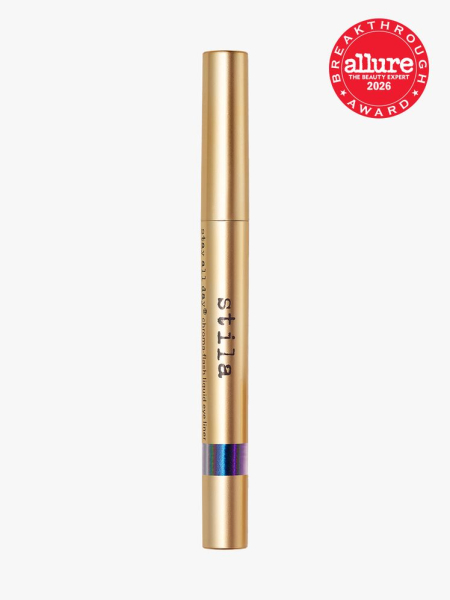 Save to wishlist
Best Breakthroughs
Stila Stay All Day Chroma-Flash Liquid Eye Liner
Amazon
There are bronze and pink and lime eyeliners out there—but one that delivers all three colors in a single swipe? That’s something special. We’re talking about a shade-shifting liquid eyeliner that’s shimmering pink one second, appears sparkling lime green the next, and then somehow morphs into metallic copper. And then back to pink again! And on and on. There’s nothing else like Stila Stay All Day Chroma-Flash Liquid Eye Liner out there because it’s the only formula of its kind (so far at least). Its chameleon-like effect is predicated on “pretty fancy geometry, physics, and chemistry,” says cosmetic chemist Kelly Dobos, who can’t even really explain what’s going on without rattling off a whole bunch of mathematical equations. That’s how difficult this unprecedented eyeliner was to create.
It all started with Stila’s global beauty director and head of artistry, makeup artist Charlie Riddle. “His dream was to make something that was different from anything else in the industry with real ‘wow’ factor,” says Arlette Palo, product development and innovation at Stila. The two of them decided it should be a liquid eyeliner, “because Stila is known for liquid eyeliner,” she explains. (Stila Stay All Day Waterproof Liquid Eye Liner launched in 2009 and quickly became one of the brand’s star products.) A meeting with their go-to ingredient supplier in Asia got the duo interested in one of the beauty industry’s most elusive, most finicky ingredients: aluminum platelets. “We were blown away by their multi-chrome effect—high-impact boldness with lots of color, lots of shine,” says Palo. (These are different from the controversial, but generally safe, aluminum salts in antiperspirants.)
Up until now, aluminum pigments had only been used in nail polish for metallic chrome shades because they are heavy (requiring a viscous base) and don’t play well with water, says Dobos. “Aluminum flakes have a true mirror-like finish that other ingredients can’t easily match—they can make a chrome pop—but they are very tricky to work with,” Dobos explains. Aluminum pigments are fragile, difficult to disperse evenly through a formula, and they want to sink or crumble upon application.
That made putting aluminum platelets into a liquid eyeliner—a thin formula that contains water—a complete and total headache. Because aluminum pigments are so big and heavy, says Palo, they would make the usual liquid eyeliner formula separate. “We had to reverse engineer a new kind of liquid eyeliner, without water,” she says. She knew she’d need a thicker, more viscous liquid eyeliner than any she’d created before, but developing one—with the help of an emollient solvent of an isododecane dimethicone combination for “a nice, hearty backbone to the formula”—wasn’t so clear-cut. “It was trial, error, trial, error, repeat—nothing was working; the eyeliners were all crumbling up,” says Palo. “We had to add a little clay [bentonite] to build up that viscosity.”
Meanwhile, creating the pigments presented its own set of challenges: Typically, chromes are made from layering titanium dioxide (a white mineral) and iron oxide (a tinted mineral in shades such as yellow, white, or red) with light-reflecting mica (transparent). It’s the structure of those layers and the way light bounces off of them that create the multidimensional chrome shades you see in products such as eye shadows, says Dobos, explaining you could see gold, for example, even though there’s no gold pigment in the product. “These are called interference pigments, and they exist in nature, too,” says Dobos, pointing to the color-shifting look of beetles’ backs. Chemists already mimic this in makeup, but the light-reflecting materials they use—usually mica, synthetic mica, or plastic particles called polyethylene terephthalate—are nowhere near as reflective as aluminum. Dobos notes that plastic glitters have largely been abandoned due to environmental concerns about microplastics. They simply can’t yield the same vivid color-shifting effects as Stila was able to achieve, she says.
"This is a game changer. I haven't seen any other liner like it."
To create their unique multi-chrome pearl formula, the team at Stila worked with liquid eyeliner and raw material chemists and formulating experts in Asia and the US to build a layer cake of aluminum platelets, pearls, pigments, and translucent silica, so that the light bounces off many layers to achieve the multicolored effect on the eye.
“Because you’re playing with how the light is being reflected,” says Dobos, there’s chemistry, geometry, and physics at play. Dobos explains that interference pigments can be difficult to use well in any circumstance, but it’s even harder when you’re working with multiple colors. Each of Stila’s chrome eyeliners includes three distinct hues, chosen for how different they are from each other, so you can really see the shifts from one shade to the next. From sapphire to teal, to magenta in Mermaid, or teal, to green, to gold in Dragonfly. There are five tri-chrome shades, all with rainbowy Ziggy Stardust vibes.
Between perfecting the base and the tri-chrome pigments, “it was an extremely long process—about two years in all—and let me tell you, it was so expensive that when we finally showed one executive the cost, she fell off her chair,” says Palo, who is speaking metaphorically. Even when they were close to being done, the formula proved too rich to flow through a pen. They rethought the packaging, and multiple versions later landed on filling one end of the tube with the eyeliner and attaching a brush to the other. “I love it for drawing graphic shapes around the eyes,” says Riddle, who’s seen people use it for face paint and to adorn tattoos. “This is a product that brings joy.”
Having this vibrant, almost-magically shade-shifting eyeliner in the makeup artist’s arsenal “is a game changer. I haven't seen any other liner like it,” says makeup artist William Scott, who appreciates its radiant pigment and hours of hold. More than a novelty, “the color shift is also quite pretty,” says makeup artist Fiona Stiles. “With one stroke, you get these three distinct colors because of the way the curvature of the eye reflects different wavelengths of light,” says Palo.
“It’s been a while since I’ve been this excited about an eyeliner,” says Allure’s senior beauty editor Jesa Marie Calaor. “The shift between the colors—and the colors the brand chose to combine—are so beautiful, no matter the light you’re standing in.” And the skill level required is relatively low: “The tip is firm and tapers to a fine point, making it easy to create sharp wings and be precise while creating thin lines,” says Calaor. And whatever shape you create stays there all day long, “never peeling or fading.”
Clinique Daily Calm Makeup Balm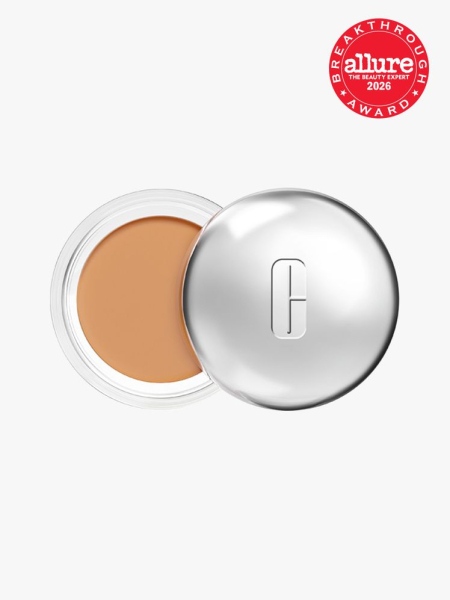 Save to wishlist
Best Breakthroughs
Clinique Daily Calm Makeup Balm
Amazon
“I've never seen another foundation like this,” says makeup artist Fiona Stiles. “I’m in my 50s, have large pores and textured skin, and this looked better on me than any other foundation I’ve ever used.” When Stiles shared her take on Clinique Daily Calm Makeup Balm, it stopped us in our tracks. This is a woman who has made up the world’s most famous faces as well as her own for more than 25 years. We can only imagine how many foundations she’s tried. What makes Clinique’s accomplishment all the more impressive is that its tinted balm is designed to feel comforting on even the most sensitive skin. “I did not want to create just another line for sensitive skin because really, who cares? They're a dime a dozen,” says Janet Pardo, SVP of product development at Clinique. “We wanted this to feel like nothing you've ever felt before.” No pressure.
The project brief was ambitious—a foundation balm that’s suitable for ultrasensitive skin, feels supremely comforting when you apply it, and wears flawlessly without settling into pores or wrinkles. In other words, Pardo set out to make a foundation that was unlike any other, and according to our judges, she succeeded, with the help of a unique ingredient and very clever chemistry. If other foundations are AP chem projects, this one’s a master’s dissertation.
Most foundation balms are made from oil, waxes, and pigments. They don’t contain water “because of sweating; water pools on the surface of their wax structure,” explains Dobos. The oil and waxes that make up other foundation balms can make them feel heavier on the skin, and “very few brands have even tried to add water because it’s so hard to make a solid emulsion,” says Dobos, who has never seen a brand she’s tested achieve such a level of success with it—until now. Clinique pushed the limits of what a balm could be (and then pushed some more) to create a solid emulsion of silicones, waxes, pigments, and water.
“I did not want to create just another line for sensitive skin because really, who cares? They're a dime a dozen."
“It was very important to have this be a solid emulsion, so that the balm would have a watery feel, like it melts as you apply it, and you get a cooling sensation as the water evaporates off the skin,” says Scott Mieselnicky, VP of product development for makeup at Clinique. But at every stage of making a foundation balm, the formula wants to reject the water. “The heating and cooling phases of manufacturing have to be very precisely controlled, or water will seep out,” says Dobos. “It’s hard enough to do a sheer solid emulsion, but adding pigments is an extra layer you've got to worry about. You have to suspend those evenly in the formula, as well.” It’s a little like a game of whack-a-mole, where you tweak the concentration of one ingredient, and wind up having to deal with a whole new issue that you’ve created. It was like working with “a moving target, and we were getting versions where the balm was too hard, or it was too soft, the color didn’t pick up well, or it looked like it was sitting in pores,” says Pardo. It took a full two years before they’d nailed the formula’s ratio of ingredients, including a newly popular silicone that helped Clinique’s balm succeed where others have failed, says Dobos.
Clinique incorporated one of beauty’s more interesting silicones—methyl trimethicone—that’s traditionally been used in hair care because of how it flashes off quickly after application to help prevent products from weighing down strands, says Dobos. She thinks it’s one of the big reasons that Clinique’s foundation balm feels lighter than any other she’s tried. The balm also delivers “a nice even, light film of [the silicone resin] trimethylsiloxysilicate for long-wear properties,” says Dobos. “Their choice of silicones definitely plays into why Clinique’s balm doesn’t settle in wrinkles and pores.”
This all happened before the foundation balm was tested on sensitive skin. “We did more testing than we’ve ever done on a makeup product,” says Pardo. Clinique didn’t just use gentle ingredients and declare this formula okay for sensitive skin, nor did they simply test participants who self-diagnosed as having sensitive skin. The 182 participants who tested the balm for two weeks all had to rank as having very sensitive skin according to a diagnostic tool called the BoSS questionnaire (BoSS stands for Burden of Sensitive Skin), which was developed by dermatologists and researchers in France to help assess a patient’s degree of sensitivity, including when vetting participants for clinical studies. “That matters. It suggests that Clinique is looking to validate tolerability in a rigorous way,” explains Mona Gohara, MD, a board-certified dermatologist in Hamden, Connecticut. Ninety-three percent of participants said their skin felt less sensitive and less irritated when using the balm.
While using it on their own sensitive skin, makeup artist William Scott says, “I was amazed. I watched it wipe away redness and sink into uneven texture, leaving buffed and happy skin under a touchable layer of makeup.” And because their skin is easily irritated, “wherever I apply a complexion product, it usually feels like my pores are itching to breathe, but wearing this felt comforting more than anything.”
Clinique Daily Calm Makeup Balm comes in eight shades, which were tested on Fitzpatrick Skin Types one through six. The undulating, palm-size silver compact was inspired by a river stone—but there was no equipment in a Clinique manufacturing facility that could handle filling it with the foundation balm (we’re talking about a nearly 58-year-old Estée Lauder legacy brand here). We had to buy new equipment to “fill every nook and cranny,” says Pardo.
Allure’s social director Kassidy Silva, who considers her skin to be more on the easily irritated side, is a big fan of the look and feel of the balm. “It reminds me of a skin tint and light-coverage foundation hybrid. It’s similar to a veil on your skin; The real skin shows through, but you still get that coverage of evenness and consistency,” she says. “It's right on the edge of a moisturizer or an SPF on my face versus a more traditional foundation. I feel like it can breathe! Plus, the color payoff is nice since I didn't find it very buildable.”
As for its packaging, Silva makes an important point regarding the screw-top cap: “It reminds me of what you'd see holding a moisturizer or a mask, which makes sense with the texture. However, I’m able-bodied and found it easy to open, but I imagine it would be hard if you have any difficulty with your hands since there’s nothing to grip,” she says.
Danessa Myricks Beauty ColorFix Sticks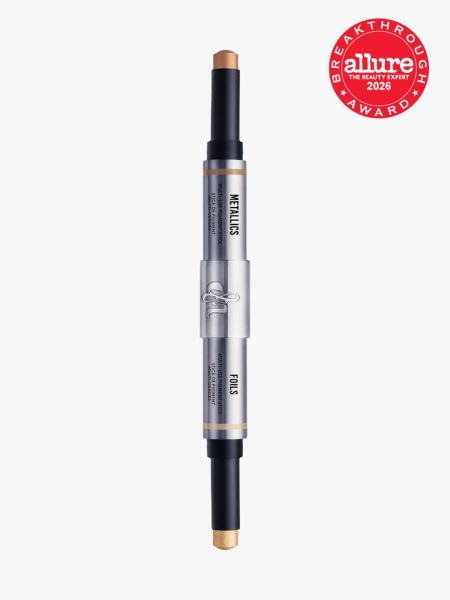 Save to wishlist
Best Breakthroughs
Danessa Myricks Beauty ColorFix Sticks
Shop
Sephora
“Kudos!” “Just delightful!” “Ahead of the curve!” “I am so obsessed!” The reviews are in, and our judges are blown away by the innovation-powering Danessa Myricks eye shadow sticks, with their brighter-than-bright foil and metallic shades and slick, wet finishes. What’s so impressive is that Myricks and her team didn’t stop at delivering one innovation with Danessa Myricks Beauty ColorFix Sticks; they reimagined what eye shadow sticks could be, from their novel water gel-based formula to the satisfying click of the magnetic wands.
“These are nothing like other eye shadow sticks,” says Scott. If you think of art store supplies, others go on “like dense pastels, whereas these are more like freshly wet paint—with a lot more pigment per swipe.”
To give ColorFix Sticks “a level of clarity that feels like pure pigment itself,” Amanda Ishak, senior director of innovation at Danessa Myricks Beauty, says she threw out the rulebook for creating stick eye shadows. Usually, they get their structure from waxes that have drawbacks, like tugging on the skin or adding frosty, milky, or yellow tones. Ishak got rid of the wax. Instead, each stick is more than half water for a cushy, cooling application. How do you hold all that water in a stick without wax? Ishak “played around with different polymers in different combinations” to create a crystal-clear base that would feel like a gel going on, and “you can throw it across the room, and it won't break,” she says.
The base also suspends pearl pigments, which are microscopic flakes of varying sizes, colors, and levels of luminosity. These are notorious for being heavy. “They want to settle in makeup, like sand in water,” says Dobos. But the goal was making a single swipe of the stick as shiny and pigmented as a solid piece of foil, so they needed a high concentration of pearls: 30%, to be exact, which elicited one word from Dobos: “Wow.” It is challenging because that many pearls can increase surface tension, easily causing sticks to crack or sweat, says cosmetic chemist Marisal Mou, adding, “It’s impressive, and they tackled it beautifully.” To get so many pearls into one slim stick, “they'd really have to do some interesting work with polymers,” says Dobos. Indeed, while experimenting with polymers, Ishak says she tossed out blends that were too cloudy and would have obscured the shine from the pearls, and others that were transparent but felt sticky.
The final clear, gel-like base “gives the color from the sticks a humid quality that the pearls dance on,” says Scott. The shades come in metallic and foil finishes, and the wet-looking high shine of the foils would usually require a makeup artist’s “advanced skill and very specific products,” says Scott. “But the ColorFix sticks take away the guesswork and the mess.” There are sparkling neutrals (silvery Mystic Taupe, golden chocolate Apollo), colorful foils (sage Galaxy Crush, opal Meteorite), and a range of metallics that are more nuanced than most. You can choose from antique bronze Lunar Veil and brighter sunset bronze Solar Flare, rose gold Cassiopeia, tawny gold Celeste, and more.
"There have been many iterations of double-ended shadow sticks, but none that can mix and match this way."
The shades themselves were the result of months of experimenting: “We tested thousands of pearls in hundreds of different combinations,” says Danessa Myricks, founder and CEO of Danessa Myricks Beauty. They sourced the pearls from different manufacturers all around the world (“There was one day we were driving around with boxes of pearls flying around the car,” says Ishak), and combined different sizes and colors in each stick for multidimensional effects.
As if reinventing eye shadow sticks wasn’t enough, Myricks and her team also reimagined customizable packaging. The gleaming silver wands, which feel substantial and have the heft of a fancy pen, are made up of three distinct magnetic pieces: a smooth tube in the center that’s about an inch long, and eye shadow sticks on either end. This makes the wands totally interchangeable. Any of the eye shadow sticks can be attached to either side of the connector. Joe Tuschong, director of package engineering and development at Danessa Myricks Beauty, explains the magnets had to be just the right strength and positioned just so inside the packaging to easily connect and disconnect without repelling or snapping apart while you’re using the wand. He tested about eight different magnets before narrowing the field to three contenders, which he placed in prototypes. Then every few weeks for about six months, he time-stamped and tested all three to see how the makeup inside held up. The whole process took about a year, says Tuschong.
Our judges agreed all that work paid off: “The magnet has a sturdy hold that travels well in bags without disassembling, but it’s easy to pull apart when you want to,” says Mou. “There have been many iterations of double-ended shadow sticks, but none that can mix and match this way,” says Scott. The mix-and-match element posed one last challenge, though: Any one shade had to layer beautifully with every other in the 20-shade collection. That’s no easy feat when you’re working with pearls of different sizes and colors—some can quite literally cover up others. “It was a lot of work to get the pearls to amplify each other, instead of masking each other,” says Myricks.
After hundreds of iterations, Myricks and her team created eye shadow sticks that are exactly what you want from makeup: fun to use, beautiful to wear, with just enough novelty to keep things interesting. “These are so pretty, so smooth, and so easy to apply. I already love shimmery eye shadows, but these are next level,” says Allure’s commerce editor Sarah Han. “Danessa just does shimmer better.” You can tap the color on right from the stick for a wash of shine, or paint the stick across the lids for a more dramatic effect. Scott likes to lay down a favorite warm or cool base shadow in and around the socket of the eye, and then draw the stick across the lash line and blend the color up a bit with a fluffy brush. The foils are bright, polished, and approachable, says Scott, while the metallics tend to have more depth and in one swipe can create a smoky eye: “You can see the shift between the base smoke and the highlight.”
Teoxane RHA Hydra Mask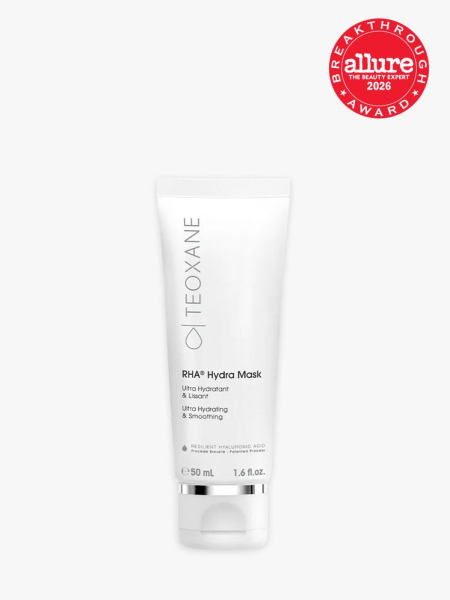 Save to wishlist
Best Breakthroughs
Teoxane RHA Hydra Mask
Teoxane
There have been lots of ways to relax in a face mask over the years—from homemade avocado-and-yogurt mixes to sheet masks loaded with hydrators. So if you’re going to try to reinvent the skin-care industry’s version of the wheel, you’ve got your work cut out for you. Teoxane, a Swiss injectables lab, set out to deliver where other masks fall short by capitalizing on its position as a manufacturer of hyaluronic acid fillers to make Teoxane RHA Hydra Mask feel as light as a delicate serum and as cooling as cucumber slices, while giving skin serious hydration that lingers long after you’ve rinsed the mask off.
“Teoxane’s RHA Hydra Mask is a lovely, gentle, rinse-off mask that soothes and hydrates dry, rough, or irritated skin in minutes,” says Laurel Naversen Geraghty, MD, a board-certified dermatologist in Medford, Oregon. That’s something a lot of other masks simply can’t do. “Typically, with rinse-off masks, so much of the water-soluble ingredients are rinsed away,” says Dobos. Your cheeks might feel smoother and softer right after using one, but that quick fix is most likely just that. “Rinse-off products usually deliver a flash of hydration,” says Dr. Gohara, “but not much lingering moisture.” When face masks do manage to give longer-lasting hydration, something “that’s difficult to achieve,” says Mou, it’s pretty much always because of one of several types of ingredients: lipids or occlusives. These ingredients sit on top of skin to help hold moisture in, but can feel like they’re sitting on top of skin (again, because they are). “They leave a residue,” says Dobos. “That can feel heavy, can impact makeup application, and cause pilling.” Other ingredients that might be used include the humectants glycerin and glycol (which attract and hold water on the skin), but these can feel too sticky when used in concentrations high enough to remain on the skin. Teoxane’s mask, on the other hand, is so light and rinses away so cleanly that it’s great “for people who don’t care for the feeling of products on their skin,” says Dr. Geraghty.
The formula rests largely on the lab’s unique hyaluronic acid, called RHA (which you can also find in Teoxane’s moisturizers and serums), but Teoxane pulled off a feat of engineering that allowed them to include large quantities of glycol and glycerin that feel elegant and not the least bit sticky.
Teoxane’s RHA is a blend of about 80% cross-linked hyaluronic acid and 20% free-floating hyaluronic acid, explains Laure Peslerbe, product development and clinical studies manager for Teoxane skin care. “The cross-linking technology is what’s really driving the benefit here. It makes the hyaluronic acid more stable and creates a net over the skin to hold in moisture almost like Saran Wrap,” says Dobos. “Most products that include hyaluronic acid just use sodium hyaluronate, a broken-down form of hyaluronic acid that’s a really big molecule, but not cross-linked hyaluronic acid.” RHA has unique film-forming capabilities, which is a major perk when you’re looking to create a rinse-off product that keeps hydrating after you’ve turned off the faucet.
“It's more interesting than a standard hydrating mask because it doesn’t rely on generic humectants alone.”
Getting a high level of hydration while maintaining a light and elegant feel, though, required the addition of glycol and glycerin, which, again, can both feel tacky on the skin. (Peslerbe had eliminated the idea of lipids, which can feel oily or heavy, because she wanted a light, transparent gel.) “To incorporate a very high percentage of glycol [specifically], which could be a sticky, heavy molecule, we had to fine-tune the perfect percentage with other ingredients,” says Peslerbe. The sweet spot was about 15% glycol, balanced out by the refreshing, crisp feel of a menthol derivative called menthyl lactate, which in turn was balanced out by soothing aloe. (Invigorating menthol derivatives can be hard for skin to tolerate at times, though Dobos notes menthyl lactate is one of the gentler options.)
Okay, so now we have glycol, glycerin, the free-floating hyaluronic acid in Teoxane's RHA, plus other sugar-derived, water-capturing molecules to treat skin to moisture that would not rinse away. Would they play well together? Eventually, yes. “We tried 30 formulations over eight months,” says Peslerbe. In clinical testing of the final formula, participants had a 20% improvement in hydration 30 minutes after rinsing off the mask, and an 8% increase a full eight hours later. (Those measurements were taken using an instrument called a corneometer.) “It delivers on its promise of a deep quench after a relatively quick 10-minute home treatment,” says Dr. Geraghty. “I absolutely agree that it reduces roughness, dullness, dryness, and tightness, something that can be difficult to achieve for rinse-off masks that are left on the skin for a relatively short time.” Making good on its long-lasting claims with clinical testing is a notable point of difference in and of itself, says Dr. Geraghty, because “so many other over-the-counter [skin-care] products don’t conduct or release any research at all.”
The combination of RHA’s hyaluronic acids with the humectants in Teoxane RHA Hydra Mask makes this “more interesting than a standard hydrating mask because it doesn’t rely on generic humectants alone,” says Dr. Gohara. “The crosslinked and non-crosslinked hyaluronic acid combination creates both immediate hydration and a structured water-retaining film, for better smoothing, more durable hydration, and stronger support for barrier function than a typical ‘wet blanket’ mask that just floods skin with glycerin and washes away.” Teoxane’s mask can also help make skin look younger with all that newfound moisture. “It’s great for softening, smoothing, and plumping skin—especially in crinkly or thin-skinned areas, like around the eyes,” explains Dr. Geraghty, and it can help reduce the look of crepiness.
“It has a very nice texture, virtually no smell, and was gentle on my eczema-prone skin,” says Allure’s managing editor Alessandra Foresto. “It’s clear, so you can run out and get coffee while you’re wearing it, and I could definitely put makeup on right after rinsing it off.” Dobos likes using the mask in place of moisturizer, especially when she wants a bare canvas for makeup. “This is a smart formulation design: a rinse‑off mask that performs more like a leave‑on treatment, but doesn’t interfere with sunscreen or makeup,” she says. The ingredients themselves may not be new, but pairing them with Teoxane’s RHA—and achieving eight hours of hydration with a light formula—makes this a more luxurious treatment than other masks Dobos has seen.
Preservé by Motiva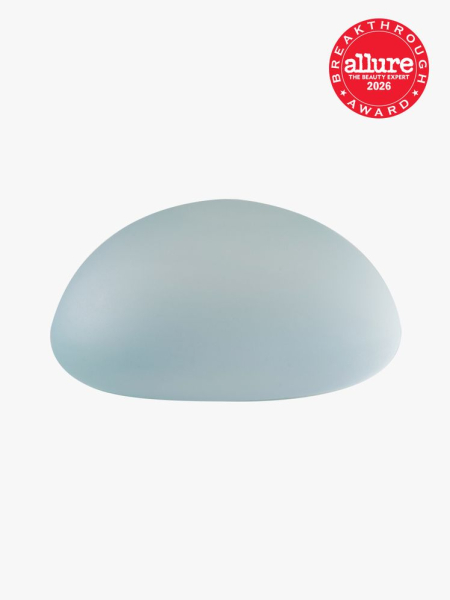 Save to wishlist
Best Breakthroughs
Preservé by Motiva
Shop at
Motiva
Breast augmentation has ranked as the second most-frequently performed plastic surgery procedure (behind liposuction) for three years running, according to annual data collected by the American Society of Plastic Surgeons. And now many of the country’s most well-respected surgeons are adding an entirely new surgical technique to their breast augmentation repertoire. Preservé by Motiva enables surgeons to preserve (hence the name) more of a patient’s natural breast anatomy while placing implants. In most cases, patients don’t need general anesthesia as they do with other breast augmentation surgeries. It’s most often done under mild sedation, like what you’d have while getting your wisdom teeth removed, says Troy Pittman, MD, a board-certified plastic surgeon in Washington, DC, and New York City. (Dr. Pittman is a Preservé procedure trainer for Motiva and serves on the company’s advisory board.)
In addition to eliminating the risks that can come with general anesthesia, the implants used in Preservé by Motiva and the way they are placed in the breast may also reduce the likelihood of certain complications that would otherwise require revision surgery. They can also be used to create a slightly different look for each patient. “You can place the implant only where tissue has been lost—often from pregnancy and breastfeeding, or weight loss—and that is a very new concept, and a new way of thinking about breast augmentation,” says Melissa Doft, MD, a board-certified plastic surgeon in New York City. With its unique set of surgical tools, placement of the implant, and impact on anatomy, “there's a meaningful difference” between Preservé and other forms of breast augmentation, says Steven Teitelbaum, MD, a board-certified plastic surgeon in Los Angeles. “I can’t think of any technical innovation in breast augmentation since I’ve been in practice quite as profound as this.” (Dr. Teitelbaum discloses that he has stock in Establishment Labs, which manufactures Motiva implants, and while he used to be a paid consultant in 2017, he isn’t anymore.)
Before Preservé, traditional breast augmentation procedures all involved one constant: cutting through some of the breast’s ligaments to create a space, called a pocket, in which to place the implant. Preservé is predicated on not cutting these ligaments. Rather, it nestles the implant within them, so it is supported by the same ligaments that support the natural breast, which the plastic surgeons we spoke to posit could be associated with less shifting and sagging of the implants down the road.
Several tools had to be developed to make Preservé a reality: First, a channel separator is used to create a small tunnel from an incision site (in the fold below the breast) into the breast without cutting the tissue. Then a surgical balloon is inserted through that tunnel and inflated inside to create the pocket for the implant.
Both the channel separator and the balloon were challenging to create: “We had to redesign the entire surgical technique for breast augmentation,” says Juan José (JJ) Chacón-Quirós, founder of Establishment Labs. “It was humbling. We went down the wrong path many times until we got to the idea of a channel separator.”
Next, they created the surgical balloon, or to be more specific, a wide range of balloons whose different diameters were designed to be used with different ranges of implant sizes. “The balloons have four silicone components that expand in the right direction to create a snug pocket; it needs to be supertight for the implant to be stable. And depending on the volume of the implant, we’ll put in more or less air,” says Chacón-Quirós. “The balloon [also] has a special polycarbonate handle [for controlling its position]. We surpassed 15 iterations. You have to develop the different components, put them together, take them apart, and eventually, hopefully, you get a grand finale.” (It’s not the first time a company has introduced a type of surgical balloon to aid in breast augmentation, says Dr. Teitelbaum, but he believes earlier versions lacked Preservé’s precision, and “were quickly dismissed” by plastic surgeons.)
There’s nothing else like Preservé in plastic surgery, says Dr. Doft. It’s aided by ultrasound guidance, so the procedure is not considered “blind.” “The existence and affordability of handheld ultrasounds that can be used in the OR…has allowed this new procedure to exist,” says Dr. Teitelbaum.
“We had to redesign the entire surgical technique for breast augmentation. It was humbling.”
After the pocket has been created, plastic surgeons introduce the implant (using something called an insertion sleeve that kind of looks like a pastry bag). Motiva Ergonomix implants are compressible, so they can fit through the channel to reach the pocket. The implant also has a unique surface with a lower risk of capsular contracture—less than 1% at three years, compared to 5 to 7% for other implants over the course of seven years—as reported by primary breast augmentation patients, meaning patients who got breast implants for the first time. “That’s revolutionary,” says Dr. Doft. This complication happens when the body recognizes an implant as a foreign object and creates a hard, often painful, scar tissue capsule around the implant. (Motiva Ergonomix won a Best of Beauty Breakthrough Award last year, making it the first-ever breast implant to take home the distinction.)
And the way the precise pocket is placed within the breast, nestled inside ligaments, can make the look of an augmentation with Preservé different from the final result you might get with other forms of breast augmentation, especially when you’re talking about larger sizes of implants. Traditionally, implants were always placed to cover the entire breast, so along with adding volume where patients want it (usually the top portion of the breast), they made the entire breast bigger. With Preservé, “I can selectively look at a patient and say, okay, she has a lot of breast tissue out to the side and in the lower part of the breast, where she really needs volume is in the upper inner part, and I can selectively put the balloon in that area to make sure that I'm using the implant there, [and avoid] giving her too much side boob,” says Dr. Pittman. “I'm able to look at what a patient's goals are, look at their existing breast tissue, and customize the operation in a way that I cannot do with any other technique.”
The entire process, including creating the channel separator and balloon and gathering clinical evidence to demonstrate safety, took 13 years. “We were creating tools specifically designed for this procedure, to be able to perform a breast procedure without creating trauma in any of the anatomical components of the breast,” says Chacón-Quirós. The first procedure using the first version of Preservé was performed in Tokyo in 2019 and in Stockholm in 2021, and it has been available internationally (including in South America and Europe) for over a year and a half. It launched in the US last spring.
Not every patient’s goals line up with Preservé, though. If a patient is very thin and wants a natural transition between the chest and the breast, Preservé might not be ideal, says Dr. Doft. “Sometimes people just don't have that much breast tissue, and you're going to see the [edges of the] implant.” Patients who want a large volume increase are also not candidates because the implants that are compatible with Preservé cap out at 315 ccs, says Umbareen Mahmood, MD, a board-certified plastic surgeon in New York City. According to Dr. Doft, the general rule of thumb is that you get roughly one cup size increase per 150 to 200 ccs, though the selective placement with Preservé is intended to create bigger-looking results using smaller sizes.
“Ideal candidates for Preservé are patients who want a natural breast augmentation with smaller, more proportionate implants, have good skin elasticity, minimal breast sagging, and have not had a previous subglandular breast augmentation,” says Dr. Mahmood, referring to breast augmentation that places implants in front of the muscle. Dr. Mahmood thinks the only disadvantage of Preservé is that not everyone is a candidate. “It does not replace 'traditional' breast augmentation,” she says, “but instead fills a specific void for patients who have wanted a breast augmentation with a very natural result, and without going under general anesthesia.”
Written by Elizabeth Siegel
Frequently Asked QuestionsWhat makes a product a Breakthrough winner in Allure’s Best of Beauty Awards?
Breakthrough winners are chosen for their innovation, whether it’s a new delivery system, first-of-its-kind formula, patent-pending technology, or an ingredient making a major debut in the market. These are the products that push the industry forward and do something no other product has done before.
Are Breakthrough winners all new products or brands?
All Breakthrough Winners are new launches or recent innovations, but they may also include existing brands introducing cutting-edge updates. What they all share is category-disrupting technology, whether that’s in skin care, makeup, hair, or tools.
How does Allure test Breakthrough-worthy beauty products?
We test these products just like every other category—hands-on, in real life, over many months. But for Breakthroughs, we also assess the science behind the claims. Our editors look at lab data, clinical results, user experience, and ingredient innovation before declaring a winner alongside expert judges.
What types of products can win in the Breakthrough category?
Breakthroughs can span every beauty type, from hair dryers with new airflow mechanics, to sunscreens using next-gen filters, to makeup with biotech ingredients. If it introduces something truly new to the industry and performs well, it’s eligible.
Are Breakthrough winners safe and dermatologist- or stylist-approved?
Yes, Breakthrough winners undergo clinical testing or are developed with input from board-certified dermatologists and plastic surgeons, cosmetic chemists, makeup artists, hairstylists, and nail artists. All products are tested for safety, performance, and practicality before they earn this honor.
Like what you see from Allure's Best of Beauty Awards?